Column Count: Why size really does matter
Column radiators come in various depths,2-column, 3-column, 4-column and beyond. The number of columns affects both the heat output and the visual weight. In larger rooms, we needed 4-column radiators to ensure adequate warmth, especially with high ceilings and original sash windows. In tighter spaces, 2-column models offered a slimmer profile without compromising too much on performance.
It’s essential to calculate BTU (British Thermal Units) based on room size, insulation, and window coverage. We worked closely with our heating engineer to get this right, and it made all the difference.
Colourways That Complement
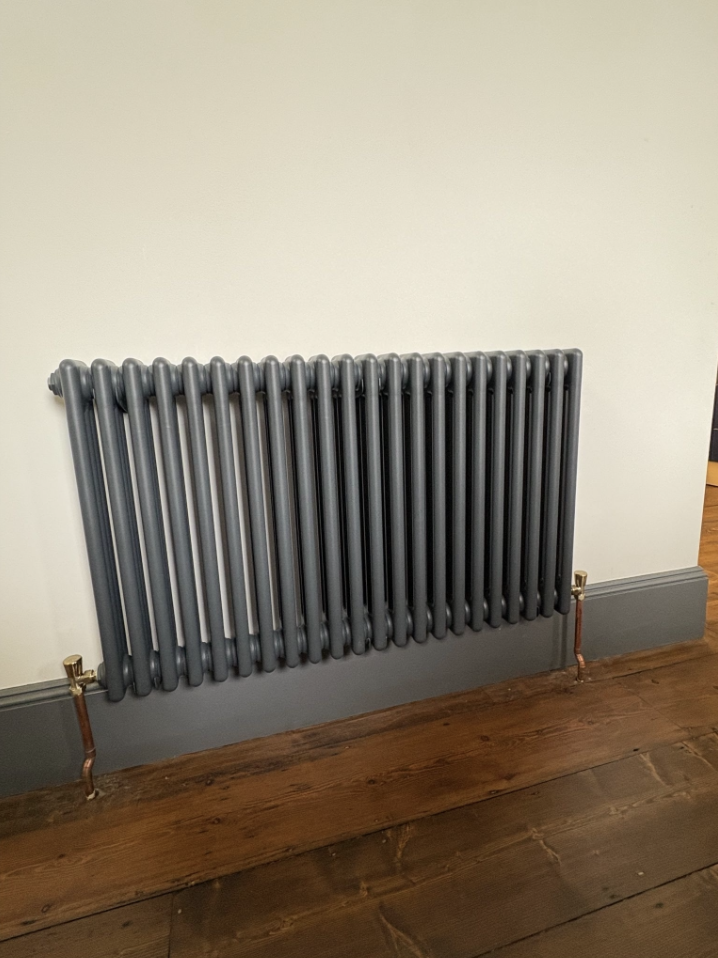
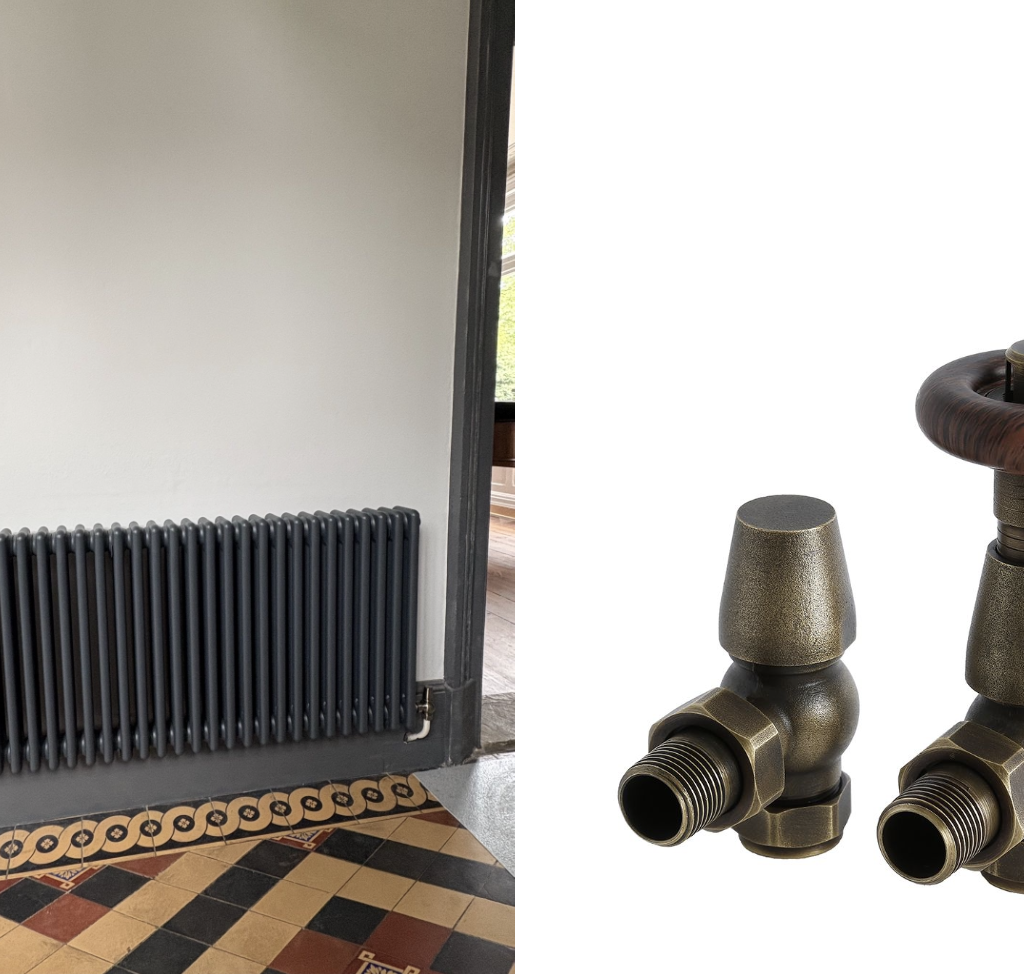
Gone are the days of “radiator white.” Today’s column radiators come in a spectrum of finishes, from soft greys and warm taupes to bold blacks and even custom colours. We leaned into the darker tones that complemented our wall colours and trim, adding depth without distraction.
Wall-Mounted vs Floor-Mounted: A Structural Story
While wall-mounted radiators offer a cleaner aesthetic, they’re not always practical, especially in older homes. The weight of even our steel radiators proved too much for some of our original plaster walls. In one particularly dramatic moment, we watched a section begin to crumble under the strain.
We had to open up the wall, reinforce the structure, and add additional support brackets to hold the radiator safely. In other rooms, we opted for floor-mounted versions with added copper pipes but still beautiful by mixing the colours of the metals (something we love to do by the way!)
Final Thoughts
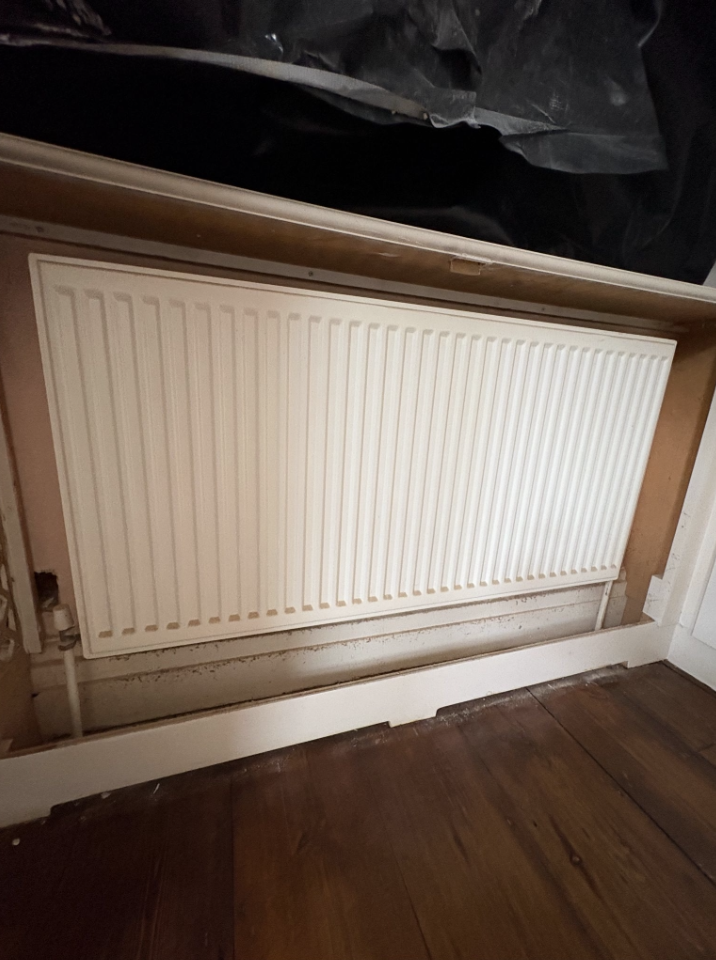
Swapping out our radiators wasn’t just a technical upgrade, it was a design decision rooted in respect for the home’s history. These details may seem small, but they shape how a space feels and functions.
If you’re considering a similar change, I’d say, go slow, ask questions, and don’t be afraid to mix materials and styles to suit each room’s personality. And if your walls start crumbling? You’re not alone, we’ve been there, and we’ve got the filler dust to prove it.
Next post …… Illuminating Intention: Replacing Lighting